
fundmystudy.co.in

Study Abroad Finance

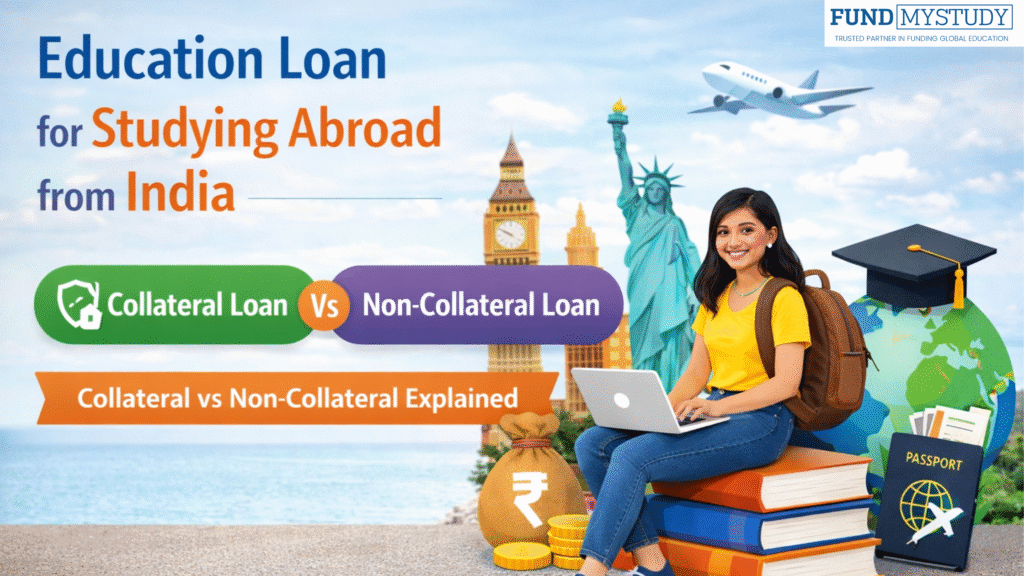
Education loan for studying abroad from India explaining collateral vs non-collateral loans with student, passport, globe, and international landmarks

Education Loan for Studying Abroad from India: Collateral vs Non-Collateral Explained

Studying abroad is a life-changing opportunity for Indian students, offering global exposure, advanced education, and better career prospects. However, international education comes with a significant financial commitment. Tuition fees, accommodation, travel, insurance, and living expenses can easily cross ₹30–60 lakhs, depending on the country and course. This is where an education loan for studying abroad from India becomes essential. But one of the biggest questions students and parents face is: Should you take a collateral education loan or a non-collateral education loan?In this detailed guide, we will explain collateral vs non-collateral education loans, compare them side-by-side, discuss eligibility, benefits, risks, interest rates, and help you decide which option is right for your overseas education plan. What Is an Education Loan for Studying Abroad? An overseas education loan is a financial product designed to help students fund higher studies outside India. These loans typically cover: Most lenders offer flexible repayment, long tenure, and a moratorium period so that students can focus on studies before repayment begins. Why Understanding Collateral vs Non-Collateral Loans Is Important Choosing the wrong loan type can result in: Understanding the difference between secured (collateral) and unsecured (non-collateral) education loans helps you align your financial capacity with long-term repayment comfort. What Is a Collateral Education Loan? A collateral education loan is a secured loan where the borrower provides an asset as security to the lender. This security reduces the lender’s risk and usually results in lower interest rates and higher loan limits. Common Types of Collateral Key Features of Collateral Education Loans Public sector banks are traditionally known for collateral-based education loans. 👉 You may also compare lenders in detail in our guide:Compare Education Loan Providers in India What Is a Non-Collateral Education Loan? A non-collateral education loan (also called unsecured education loan) does not require any asset as security. Approval is based on: These loans are popular among students who do not own property or prefer not to risk family assets. Key Features of Non-Collateral Education Loans Non-collateral loans are commonly offered by private banks and NBFCs. Collateral vs Non-Collateral Education Loan: Comparison Table Feature Collateral Education Loan Non-Collateral Education Loan Security Required Yes (property/FD/etc.) No Interest Rates Lower Higher Loan Amount Higher (₹50L–₹1.5Cr+) Limited (₹20L–₹60L) Processing Time Slower Faster Risk to Family Assets Yes No Eligibility Focus Collateral value Academic + co-applicant Best For Expensive overseas courses Students without assets Interest Rates: How They Differ Interest rates play a crucial role in total repayment: Even a 1–2% difference can increase repayment by several lakhs over time. Loan Eligibility Criteria for Studying Abroad For Collateral Loans For Non-Collateral Loans To understand eligibility in depth, see our guide:How to Choose the Right Education Loan Provider for Overseas Education Loan Amount & Coverage Differences Collateral Loans Non-Collateral Loans Repayment & Moratorium Period Both loan types usually offer: However, collateral loans often allow longer tenures, reducing EMI burden. Tax Benefits on Education Loans Interest paid on education loans qualifies for deduction under Section 80E of the Income Tax Act. Income Tax India – Education Loan Tax BenefitsThis benefit applies to both collateral and non-collateral loans. Pros and Cons Summary Collateral Loan – Pros Collateral Loan – Cons Non-Collateral Loan – Pros Non-Collateral Loan – Cons Lower interest Risk to family assets No asset risk Higher interest Higher loan amount Longer processing Faster approvals Limited loan amount Better long-term affordability Legal verification required Simplified documentation Strong co-applicant required Which Option Is Better for You? Choose a collateral education loan if: Choose a non-collateral education loan if: FAQs: Final Takeaway Both collateral and non-collateral education loans have their place in overseas education planning. The right choice depends on cost of education, risk appetite, asset availability, and repayment capacity. Make a well-informed decision, compare lenders carefully, and choose a loan that supports your global education dream without unnecessary financial stress.

Education Loan for Studying Abroad from India: Collateral vs Non-Collateral Explained Read More »

How to Choose the Right Education Loan Provider in India for Overseas Education

Pursuing higher education abroad is a dream for thousands of Indian students every year. However, the financial requirement, which often runs into lakhs or even crores of rupees can be a major barrier. Education loans for overseas studies help bridge this gap, but choosing the right education loan provider is critical. A poor choice can burden you with high costs, rigid terms, and repayment stress. In this complete guide, you will learn how to choose the best education loan provider in India for overseas education, understand what to evaluate, compare key lenders, and make a confident decision. Why Choosing the Right Education Loan Provider Matters The choice of provider affects: A small difference in interest rate or processing fees can translate into lakhs of rupees over the loan tenure. That’s why this decision should be deliberate, not rushed. What Makes Overseas Education Loans Different? Education loans for study abroad cover a wider range of needs, including: Because the amounts are larger and risks perceived higher, lenders often require stricter documentation and sometimes collateral security. Key Factors to Evaluate Before Choosing a Provider Below are the most important criteria to compare when selecting an education loan provider: Overview Table: Key Loan Provider Features Feature / Provider Public Banks (e.g., SBI, PNB) Private Banks (HDFC, ICICI) NBFCs (Avanse, Credila) Government Schemes Interest Rate Lower Moderate Moderate–High Subsidized Processing Time Medium (10–30 days) Medium (10–25 days) Fast (5–15 days) Depends on bank Collateral Yes (above limits) Yes/Partial Often No As required by bank Loan Amount Up to course cost + extras Up to course cost + extras Up to full cost Available Moratorium Course + 6 months Course + 6 months Course + 6 months Course + 6 months Flexibility Standard Better High Governed by bank 1. Interest Rates — Compare Carefully Interest rates determine your overall cost of borrowing. Even a 1% difference can add up substantially over an 8–15 year tenure. You can also read our comparison on education loan providers in India including overseas options 2. Loan Processing Time — Why It Matters Processing time determines whether your loan will be disbursed before your university’s payment deadline. Typical processing timelines: If your university has strict fee deadlines, choosing a lender with faster processing or good support for quick documentation helps avoid late penalties. 3. Collateral vs Non-Collateral Loans Collateral requirement is a major deciding factor: For overseas education, many NBFCs and private lenders offer non-collateral loans up to a certain limit, reducing the documentation burden. 4. Loan Tenure & Moratorium Period Longer tenure and flexible moratorium help reduce monthly EMIs initially and make repayment manageable once you start your career abroad. 5. Repayment Flexibility & Benefits Good lenders offer: Understanding these subtle differences helps maximize your financial comfort. 6. Co-Applicant and Eligibility Requirements Most lenders require a co-applicant, often a parent, spouse, or guardian. Their can affect approval chances and interest rates. Choose a co-applicant with strong financials and clear credit history. 7. Support and Digital Experience When studying abroad, you may need quick access to loan status, document uploads, or support. Providers with mobile apps, online tracking, and responsive support make the experience smoother. Comparing Providers: What Works Best for You? Here’s how common providers stack up for study abroad loans: Public Sector Banks Private Banks NBFCs (e.g., Avanse, Credila) Government Education Loan Schemes Checklist Before You Finalize a Loan Provider ✔ Understand the full cost of borrowing (interest & processing fees)✔ Check loan disbursement timelines✔ Confirm collateral requirements✔ Verify moratorium period and repayment flexibility✔ Ask about prepayment charges✔ Review customer support quality FAQs — Education Loan for Overseas Studies in India

How to Choose the Right Education Loan Provider in India for Overseas Education Read More »

Education loan for MBA abroad without collateral – complete guide for Indian students

Education Loan for MBA Abroad Without Collateral: Complete Guide for Indian Students

Pursuing an MBA abroad is a dream for many Indian students, but arranging finances can feel overwhelming—especially if you don’t have property or assets to pledge. The good news? Today, getting an education loan for MBA abroad without collateral is absolutely possible if you meet the right criteria. In this guide, we’ll break down everything you need to know—eligibility, loan amounts, interest rates, lenders, application steps, and smart tips to improve approval chances. Whether you’re planning to study in the USA, UK, Canada, Europe, or Australia, this article will help you move forward with confidence. Can You Get an Education Loan for MBA Abroad Without Collateral? Yes, Indian students can get an education loan for MBA abroad without collateral, also known as an unsecured education loan. Unlike traditional bank loans that require property, fixed deposits, or land as security, unsecured loans are approved based on: Most NBFCs and international lenders specialize in offering such loans for MBA programs abroad, while some banks may offer partial unsecured options for top-tier universities. What Is an Unsecured Education Loan for MBA Abroad? An unsecured education loan means: These loans are ideal for students who: Eligibility Criteria for MBA Abroad Education Loan Without Collateral While criteria vary slightly across lenders, most follow these basic requirements: Student Eligibility Co-Applicant Eligibility How Much Loan Can You Get for MBA Abroad Without Collateral? Loan amounts depend on the country, university ranking, and overall profile. Typical Loan Ranges Factors That Decide Loan Amount Interest Rates for Unsecured MBA Abroad Education Loans Interest rates are generally higher than secured loans but vary by lender. Interest Rate Range Repayment Structure Top Lenders Offering MBA Abroad Loans Without Collateral Most unsecured MBA abroad loans are offered by: What Lenders Evaluate Rather than applying to multiple lenders individually, platforms like FundMyStudy help students compare education loan providers in India and choose the best option based on their profile. Step-by-Step Process to Apply for MBA Abroad Loan Without Collateral Step 1: Shortlist Universities Finalize your MBA university and country. Step 2: Estimate Total Cost Include tuition fees, living expenses, travel, and insurance. Step 3: Check Eligibility Loan eligibility depends on university ranking and profile strength. Step 4: Compare Loan Options Compare interest rates, processing fees, and repayment terms. Step 5: Submit Documents Upload academic, financial, and KYC documents. Step 6: Loan Approval & Disbursal Once approved, funds are disbursed directly to the university. Documents Required for MBA Abroad Education Loan Student Documents Co-Applicant Documents Which Countries Are Best for Unsecured MBA Loans? Unsecured loans are easier for MBA programs in: Top-ranked universities and business schools improve approval chances significantly. MBA Abroad Without Collateral: Banks vs NBFCs Feature Banks NBFCs Collateral-free approval Limited High Loan amount Moderate Higher Higher Slow Fast Flexibility Low High 👉 For students without property, NBFCs are usually the better option. Common Mistakes to Avoid Why Choose FundMyStudy for MBA Abroad Education Loans? FundMyStudy simplifies the entire loan journey by: Whether you’re aiming for an MBA in the USA, UK, or Europe, FundMyStudy helps you make smarter financial decisions. FAQs

Education Loan for MBA Abroad Without Collateral: Complete Guide for Indian Students Read More »

Call Us For Any Queries